
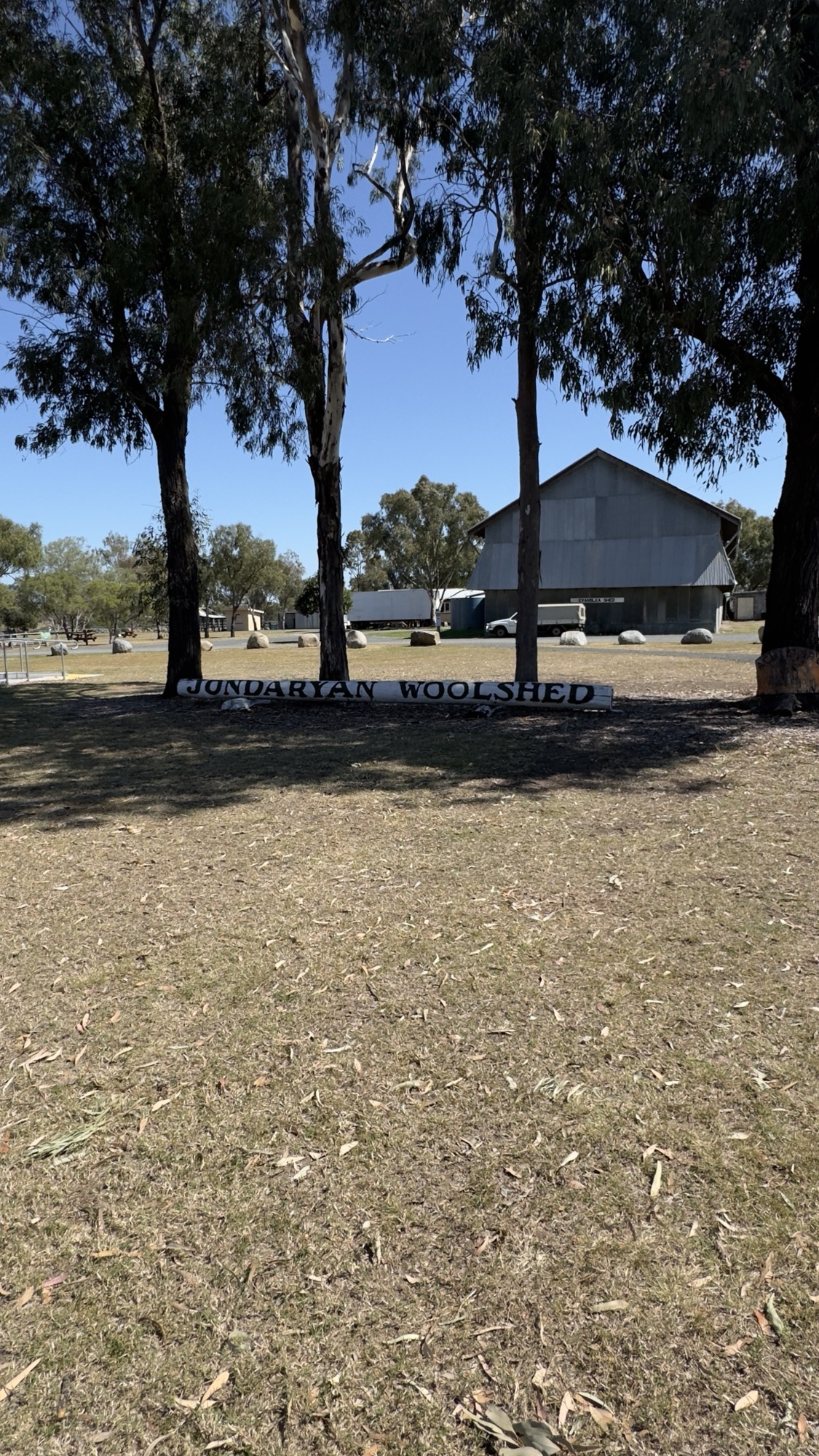
For many years, the idea of going on holiday seemed like a far-off dream. I used to watch other people pack up and head off on weekend getaways, camping trips, or even overseas vacations, and I would wonder if we’d ever get the chance to experience that freedom. It always felt financially out of reach, and I honestly couldn’t imagine how we’d ever manage it.
But life has a funny way of surprising you. Now in our late 50s, we’ve finally been able to do what once seemed impossible—we took a holiday! And not just any holiday. This year, we packed up and headed to the Western Downs for a well-deserved break.
Our recent trip to Toowoomba for a bull sale turned into a much-needed extended stay, exploring beautiful places we’d never been to before. One highlight, in particular, was visiting the historic Jondaryan Woolshed, a place I quickly fell in love with. The history of this station is so rich that you can almost feel the past come alive as you walk around.
The woolshed, with its weathered charm, instantly took me back to an era when life was both simpler and harder. I could practically see the shearers hard at work, sweating under the sun as they expertly sheared sheep, the air thick with the sounds of labor and the heat of the Australian summer.
The old homesteads and outbuildings were equally captivating, offering a glimpse into a time when families lived, worked, and raised children in this rugged yet beautiful part of the world. The blacksmith shop, the school, and the manager’s quarters were all lovingly maintained, a testament to the generations who lived and worked there. I was especially struck by the magnificent plantation-style home that now serves as the administrative building—still standing tall in its original glory.
As I wandered the grounds, I was transported to a different time, where the whispers of the past seemed to dance on the breeze. Walking around the woolshed, I felt a deep sense of peace and connection. There’s something magical about being in a place with so much history—a sense of timelessness that makes you slow down and appreciate the moment.
And the windmills! Anyone who knows me knows how much I love windmills. To see so many in different shapes and sizes lined up was a real treat. There’s something calming and beautiful about these structures, gently turning in the wind, and they added to the charm of the place.
This trip wasn’t just a break from our everyday routine—it was a reminder that it’s never too late to explore new places and create lasting memories. The Jondaryan Woolshed holds a special place in my heart now, and I know we’ll be back. Sometimes, all it takes is a little adventure to rekindle your sense of wonder.
To anyone who, like me, thought a holiday might never be possible—don’t give up. Life has a way of surprising us, and it’s never too late to discover new places, new experiences, and new joys.


I recommend you allow a good couple of hours to walk around and tour the site. There is so much to see and absorb. Take a hat and bottle of water because walking around such a large site is hot work!
The Jondaryan Woolshed is proud to be one of the oldest and largest woolsheds in Australia. A stately monument, it celebrates the rich, cultural and pastoral history of the Darling Downs region.
The story of the Jondaryan Woolshed began in 1840, and at the time, the station was called Gundarnian, which in the local Jarowair dialect translated to Fire Cloud or Place of the Fire Cloud. For the first 17 years, it changed hands seven times, and little development was carried out. The original shearing shed built on the station in 1847 was burnt down in 1849 by striking shearers. They were angry at the intolerable working conditions, treatment and refusal for fair wages. A second small shearing shed was built in 1850. The iconic, heritage-listed Woolshed that stands on the grounds today commenced construction in 1859. Approximately 5,000 sheets of corrugated galvanised iron were used to roof the vast shed, and it was constructed out of hand-hewn Ironbark timber, with whole trees being used to support the structure. It was completed in 1861, and the first shearing was carried out that year. In 1863 the station was purchased for £108,000, ($4,320,000 in today’s value) and it had finally become a profitable business. A shearer’s quarters complex was built to house and feed 100 men, followed by a station store, a butcher’s shop and a hide and tallow house.
In 1864, the last 40,000 acres of land was purchased and added to Jondaryan Estates, bringing the property to 300,000 acres. Jondaryan became the centre of an empire of stations across southern and central Queensland. Today, the architecture still exudes character, charm and tradition and is a wonderful impression of all things Australian and is still considered grand in its design. By 1873, 250,000 sheep were being shorn each season, with shearing being carried out during spring and summer months.
You can read more about this magnificent property click here



Leave a Reply